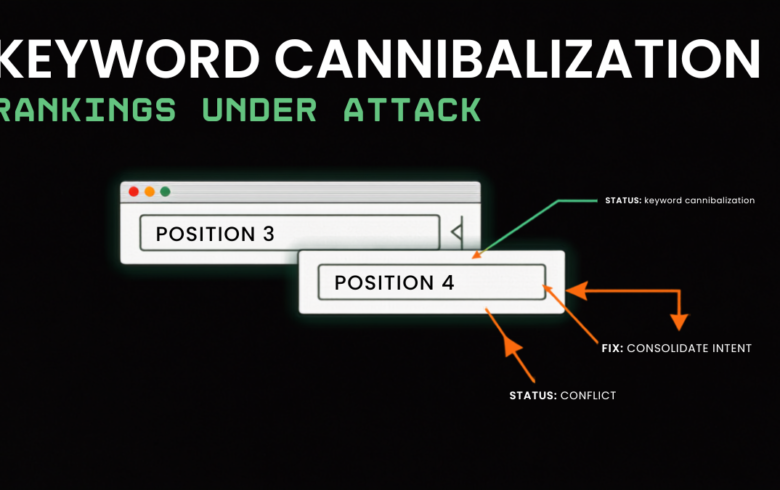
How Has AI Changed SEO Agencies?
For the better part of two decades, SEO agencies sold a fairly simple product: rankings. Research keywords, build pages around them, earn backlinks, land on page one, collect the click. Agencies built entire businesses on that loop, with monthly retainers and rankings reports that made the relationship between effort and traffic feel predictable.
That loop doesn’t hold the way it used to. In 2026, the question that matters most for an SEO agency isn’t “where do we rank?” anymore. It’s “does the AI even mention us?” ChatGPT, Gemini, Perplexity, and Google’s own AI Overviews have inserted themselves between the person searching and the website that used to earn the click, and every agency in this space has had to decide whether to adapt or keep selling a version of SEO that increasingly doesn’t work.
Here’s what actually changed, what the data shows, and what it means for anyone buying or selling SEO services right now.
The Numbers Behind the Shift
There was a period, not long ago, where some SEOs still argued AI Overviews were a passing phase, or that they’d only touch a small slice of searches. That argument doesn’t hold up anymore. Google’s AI-generated summaries now appear on roughly 48% of all search queries, up sharply from single digits a little over a year earlier.
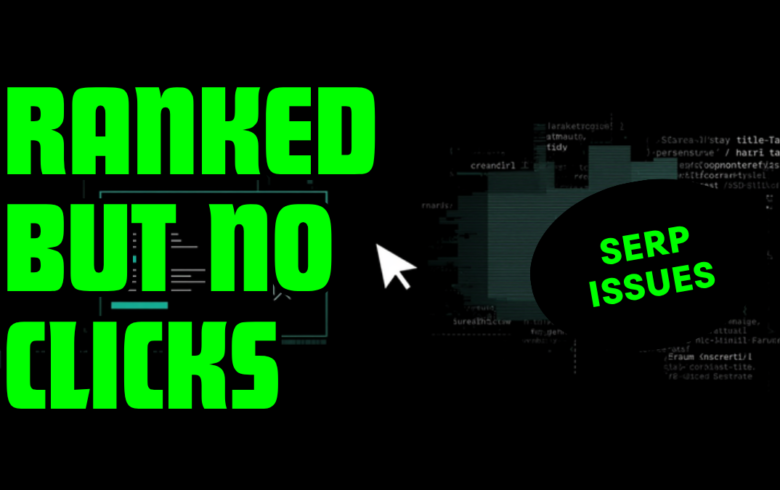
It’s not just that AI Overviews exist. It’s what they do to clicks once they’re there. When an AI Overview appears above a #1 ranking, that top organic result can lose up to 58% of the clicks it used to get. On queries where an AI Overview shows up, organic click-through rate has fallen from 1.76% down to 0.61%, a drop of 61%.
Queries without an AI Overview are losing clicks too, down 41%, from 2.72% to 1.62%. That points to a change in search behavior that goes beyond how a particular results page looks. People have gotten used to not clicking.
That tracks with the wider picture. About 60% of all searches now end without anyone clicking anything. On mobile, it’s closer to 77%.
Overall U.S. organic search traffic is down about 2.5% year over year, a number that hides a much sharper decline for certain types of sites. Publishers, which depend heavily on informational traffic, have seen Google referral traffic drop closer to 38% year over year.
There’s an important exception to the decline, though. Brands that get cited inside an AI Overview see an organic CTR of 0.70%, compared with 0.52% for brands that don’t get mentioned, a 35% gap. Visibility didn’t stop mattering. It just changed shape, and a lot of agencies were still selling the old version of it.
New Terminology, and What’s Actually Behind It
Anyone following this space has run into a wave of new acronyms: GEO, AEO, LLMO, GXO. It’s easy to dismiss it as rebranding, but underneath the terminology, something real has happened: SEO has split into several distinct disciplines, all aimed at the same outcome, which is getting an AI system to trust a source enough to cite it.
GEO, Generative Engine Optimization, is about earning a mention inside an AI-generated answer from tools like ChatGPT, Gemini, or Perplexity, rather than a ranking on a traditional results page.
AEO, Answer Engine Optimization, is narrower. It focuses on shaping content to directly answer one specific question, in the format an answer engine is likely to lift and quote.
LLMO, LLM Optimization, goes a layer deeper. It’s less about persuasion and more about legibility: writing with clear entities and unambiguous claims so a language model can parse and reuse the content accurately.
GXO, Generative Experience Optimization, is the newest of the four and still early. It’s about preparing for a future where AI agents don’t just answer questions but compare products and complete purchases on someone’s behalf. That means content needs to be readable by a system that’s about to transact, not just a person who’s about to read.
Most agencies now bundle all four into a single “AI search optimization” offering, alongside the technical SEO and content work that still matters for whatever blue-link traffic remains.
How the Day-to-Day Work Has Changed
Audits now go beyond rank tracking. Agencies run “AI visibility audits” that track how often, and how accurately, a brand gets mentioned across ChatGPT, Gemini, Perplexity, and Google’s AI Mode, a category of reporting that barely existed a few years ago.
Content briefs have changed shape too. Content that gets cited by AI systems tends to answer a question directly within the first few sentences, includes original data or a genuinely new insight, and is structured clearly enough, with real headers, lists, and tables, that a model can lift it without distorting the meaning. Long, keyword-stuffed posts built to rank on search volume alone have largely stopped performing, because they don’t offer anything an AI model wants to repeat.
Technical SEO has expanded its scope. Alongside Googlebot, teams now manage crawl access for GPTBot, PerplexityBot, ClaudeBot, and other AI crawlers, along with heavier use of schema markup to make facts and entities machine-readable.
Reporting has gotten more complex as well. Clients want to know not just whether a page ranks, but whether the brand gets cited, and whether that citation influences recall or a later branded search. That’s harder to demonstrate with a rankings dashboard alone, so agencies have built new reporting layers to answer it.
Internally, AI now handles a meaningful share of keyword clustering, first drafts, technical audits, and basic reporting, which has shifted strategists’ time toward judgment calls: what’s worth writing about, what claims will hold up, and what’s actually worth publishing.
How the Business Model Has Shifted
Pricing has split into two distinct tiers. At the low end, AI-assisted production has pushed commodity SEO work down substantially, with some operators offering basic optimization for $60 to $100 a month. At the high end, full AI search optimization programs spanning multiple platforms, with human strategists directing the work, run from $2,000 to more than $25,000 a month. AI-powered services in general command a 20 to 50 percent premium over equivalent manual work, reflecting the speed and scale involved.
Billing structures are shifting too, moving away from pure hourly rates and toward performance-based compensation tied to citation frequency, share of voice inside AI answers, and assisted conversions.
The freelance market has been affected significantly. Platforms built around freelance knowledge work have cut headcount, as AI lets businesses handle more writing, basic design, and data work in-house. Entry-level SEO writers and generalists have seen the sharpest pressure on rates and demand, while senior strategists who can direct AI tools and explain results to leadership have become more valuable, not less.
Despite the disruption, the industry overall keeps growing. The global SEO agency market is estimated at roughly $88 billion in 2026, with projections putting it near $165 billion by 2030. That growth isn’t evenly distributed: it’s concentrated among agencies that adapted early, while slower-moving agencies are increasingly flagged as at risk in industry analysis.
Who’s Benefiting and Who’s Struggling
A few patterns stand out. Agencies that used AI to accelerate research and production, rather than replace strategy, have been able to serve more clients with the same headcount while maintaining quality. Brands with genuine expertise and original data have gained ground, because generative engines are built to favor specific, verifiable content over generic material. Senior strategists who understand both the AI systems and the underlying business have become harder to replace, since someone still has to decide what’s worth saying and how to interpret AI-visibility data.
On the other side, publishers and content sites that relied on high-volume informational traffic have been hit hardest, since that’s exactly the kind of query AI Overviews now answer directly. Entry-level writers whose main value was producing serviceable first drafts at volume have seen the clearest wage and demand pressure, because that task is now handled cheaply and quickly by AI.
What’s Actually Working
Setting aside the terminology, agencies getting results in 2026 tend to do a consistent set of things. They lead with a direct, quotable answer instead of building up to the point. They prioritize original research and first-hand expertise, since that gets picked up by AI systems far more than recycled conventional wisdom. They structure content clearly, with real headers and lists, so it’s legible to both readers and AI crawlers. They track citations as a metric in its own right, monitoring how often and how accurately a brand appears across AI Overviews, ChatGPT, Perplexity, and Gemini. And they keep a human editorial layer on AI-drafted content, since agencies that have run into quality issues are typically the ones that skipped that step.
Where This Is Headed
Agency leaders generally expect the traditional ranking-and-click model to keep shrinking as a share of overall value delivered, without disappearing outright. Zero-click and AI-answer experiences are expected to keep growing. Agentic AI, systems that take actions like comparing products or completing purchases rather than just answering questions, is already pushing early adopters toward GXO-style optimization aimed at systems that transact rather than just respond.
For agencies, that likely means the service menu in 2027 looks further removed from 2023’s than 2026’s does already: more AI-visibility monitoring, more machine-readability work, more emphasis on original research and demonstrable expertise, and pricing increasingly tied to whether a brand is actually cited and trusted inside the answers people rely on.
Agencies treating this shift as temporary are losing ground the fastest. Agencies treating it as a permanent redefinition of what visibility means are the ones setting the direction for the rest of the industry.