Retainer vs Performance-Based SEO Pricing
Every business paying for SEO eventually runs into the same decision: pay a fixed monthly retainer regardless of results, or pay based on performance and only reward the agency when specific outcomes are hit. That choice has gotten more complicated in 2026, because the metrics agencies used to measure performance, rankings and clicks, no longer capture what’s actually happening in search. With AI Overviews and chat-based answers now handling a large share of queries without a single click, the old performance benchmarks don’t map cleanly onto pay-for-results contracts anymore.
The Quick Answer
Pick a straight retainer if you’re early in AI search optimization and still building the technical and content foundation, since there isn’t enough of a track record yet to set fair performance benchmarks. Pick a performance or hybrid model if that foundation already exists and you have reliable AI-visibility tracking in place, since a performance contract is only as fair as the data used to judge it. When you’re not sure which camp you’re in, default to hybrid: a smaller base fee plus bonuses tied to specific, agreed KPIs limits downside on both sides.
This piece looks at how each pricing model works, why performance-based SEO has become harder to define in the AI search era, and which model tends to make more sense depending on the type of business paying for it. If you’re specifically weighing pay for performance SEO against a flat monthly fee, the summary above covers the short version. For a full breakdown of what agencies actually charge across both models, see our guide on how much you should pay for AI search optimization.
How Retainer Pricing Works
A retainer is a fixed monthly fee paid regardless of specific outcomes that month. It’s still the single most common pricing model in SEO: in a 2026 survey of 500 SEO professionals, 27.2% reported using monthly retainers as their primary model, more than any other single approach, though well short of a majority. Monthly retainers in 2026 generally range from $1,500 to $15,000 or more, with small businesses typically paying $2,500 to $5,000 a month for comprehensive SEO, mid-market companies investing $5,000 to $10,000, and enterprise organizations spending $10,000 to $50,000 or more.
The appeal of a retainer is predictability. Both sides know the cost in advance, and the agency isn’t under pressure to chase short-term wins at the expense of long-term strategy. The tradeoff is that a retainer doesn’t inherently tie payment to results, so the burden falls on the client to track whether the work is actually producing outcomes. If cash gets tight partway through a contract, it’s worth knowing what actually happens next; see our piece on pausing an SEO retainer for a few months.
How Performance-Based Pricing Works
Performance-based, or pay-for-performance, pricing ties payment to specific, pre-agreed outcomes, such as ranking improvements, traffic growth, or lead volume. In its purest form, a client pays only when the agency hits those targets.
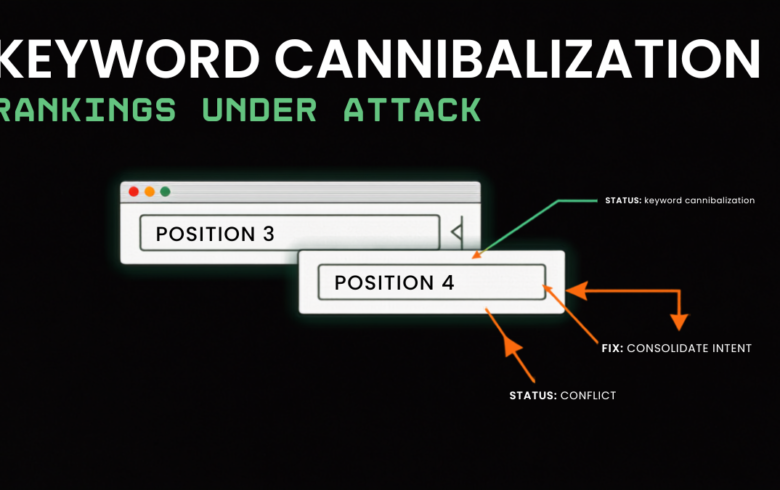
The appeal is straightforward: it reduces financial risk for the client and shifts it toward the agency, which creates a direct incentive for the agency to focus on strategies that produce measurable results rather than busywork. In practice, though, this model carries real limitations. SEO results take time and are affected by variables outside any agency’s control, including algorithm changes, competitor activity, and shifts in user behavior, which makes it genuinely difficult to attribute outcomes cleanly to specific agency actions. There’s also a risk of the metrics themselves being hollow: an agency can get a client to rank #1 for a keyword that technically hits the agreed target without that keyword ever bringing in a qualified customer, meaning the client ends up paying for a vanity metric rather than a business outcome.
Because of this complexity, pure performance-based pricing remains one of the least common models, reported as a primary approach by only about 16% of agencies in the same 2026 survey, though it is gaining adoption among agencies confident enough in their process to take on that risk. For small to mid-sized businesses, a typical performance structure looks like a base fee of $1,000 to $3,000 plus a performance bonus of 20 to 50 percent on top, rather than payment being entirely contingent on results.
Where Performance-Based Pricing Actually Goes Wrong
A lot of guidance on this model stops at “it aligns incentives” and skips the failure mode. The most common one: an agency chases a keyword that’s technically easy to rank for and irrelevant to the business, hits the agreed target, and gets paid, while the client’s actual traffic and revenue don’t move. The contract gets satisfied. The business doesn’t. This is why a pure performance deal needs the target defined as a business outcome, not a ranking position, or it’s just a vanity-metric contract with extra paperwork.
The other failure mode is worse: an agency under pressure to hit a rankings target within a fixed timeline reaches for outdated, aggressive link tactics that risk a penalty. If you’re evaluating a performance-based proposal, ask directly what tactics get used to hit the target, not just what the target is.
Why Performance-Based Models Are More Complicated in the AI Search Era
Performance-based SEO was already hard to structure fairly before AI search became widespread, since ranking position and traffic were imperfect but at least measurable proxies for value. AI search has removed even that footing in a lot of cases.
Traditional metrics like rankings, clicks, and session counts increasingly fail to show whether a brand is actually winning or losing visibility, since generative engines often deliver a complete answer without sending anyone to a website at all. Roughly 68% of Google searches now end without a click at all, up from about 60% just two years ago, and a performance contract built purely around click-through traffic can show an agency “failing” even when the brand’s actual visibility inside AI answers is strong and improving.
This has forced a rethink of what “performance” should even mean in a contract. Ranking #1 in a traditional results page carries less meaning if the answer above it, generated by AI, already resolved the searcher’s question. That’s pushed both agencies and clients toward a different set of KPIs.
The New KPIs Being Used to Measure Performance
A working set of metrics has emerged specifically for tracking AI search performance, generally organized around five categories: AI citation rate, share of voice, sentiment and accuracy, AI referral traffic, and AI-influenced pipeline. See our guide on setting SEO KPIs with your agency that actually mean something for how to turn these into contract terms instead of vague promises.
Citation share, sometimes called AI Overview inclusion rate, measures the percentage of monitored queries where a domain appears as a cited source in an AI-generated answer. It functions as the AI-search equivalent of traditional keyword rankings, and the gap between the two is now the central problem with old-style contracts: in July 2025, about 76% of AI Overview citations came from pages already ranking in the top 10. By March 2026, that had fallen to roughly 38% (a separate long-term study puts the broader overlap, including pages well outside the top 10, at closer to 54%, but the direction is the same: rank position alone is a shrinking predictor of citation). A page can rank on page one and still lose the citation entirely, which is exactly the scenario a rankings-only performance contract can’t see. Share of voice is typically split into two versions: mention-based, tracking how often a brand is mentioned at all, and citation-based, tracking how often it’s specifically cited as a source, with the answer itself (not the click) treated as the unit being measured.
Other metrics being incorporated into 2026 KPI frameworks include entity coverage (how completely a brand’s key topics and offerings are represented across AI-indexed content), sentiment and accuracy of AI-generated mentions, and assisted conversions, meaning cases where a branded search or direct visit follows an earlier AI-answer interaction that never resulted in a click.
These metrics are more meaningful for AI-era visibility, but they’re also newer, less standardized across tools, and harder to independently verify than a simple rank-tracking report, which adds a layer of complexity to any contract that tries to tie payment directly to them.
Where Hybrid Models Fit In
Given the difficulty of running a pure performance model on metrics that are still maturing, a hybrid structure has become the more common middle ground in 2026: a smaller base retainer combined with performance bonuses layered on top. This balances the stability of guaranteed monthly work with some degree of incentive alignment, without requiring either party to bet entirely on metrics that are still being standardized. Before agreeing to a hybrid contract, it’s worth being clear on what actually counts as scope in an SEO retainer, since that’s usually where the base-fee portion of a hybrid deal gets disputed later.
In practice, a hybrid contract might include a reduced base retainer, in the range of $1,000 to $3,000 for a small to mid-sized business, alongside bonus payments tied to specific, agreed KPIs like citation frequency, share of voice growth, or AI-referral traffic increases. Some businesses layer a dedicated AI citation monitoring service on top of this, typically priced between $1,000 and $3,000 a month, specifically to generate the data needed to evaluate those bonus-linked KPIs in the first place.
Retainer vs Performance vs Hybrid, At a Glance
| Model | How Payment Works | Typical Cost | Best For | Main Risk |
|---|---|---|---|---|
| Retainer | Fixed fee monthly, regardless of outcome that month | $1,500-$15,000+/mo | Early-stage sites still building the technical and content foundation | No direct link between spend and results |
| Performance | Paid only when pre-agreed targets are hit | $1,000-$3,000 base + 20-50% bonus | Established sites with reliable AI-visibility tracking already in place | Vague targets can be gamed with vanity metrics |
| Hybrid | Smaller base fee plus bonuses on agreed KPIs | $1,000-$3,000 base + bonuses | Most businesses uncertain which of the two above fits them | Requires upfront agreement on what “success” actually means |
A Worked Example
Say a mid-market business is choosing between a $6,000 flat monthly retainer and a $2,500 base fee plus a 30% bonus for hitting agreed AI-citation and traffic targets. If the agency delivers strong results, the performance route can end up costing more than the flat retainer once the bonus lands, and that’s the point: the extra spend only happens because the outcome showed up. If the agency underdelivers, the performance route caps out cheaper, close to the $2,500 base, while the retainer client still owes the full $6,000 regardless of what happened that month. Run the same math with your own quoted numbers before signing either contract, the figures above are illustrative, not a benchmark.
How to Verify Either Model Is Actually Working
A retainer without independent verification is just trust. Pull your own Google Search Console data monthly instead of relying solely on the agency’s report, it’s free, first-party, and shows clicks, impressions, and position regardless of anyone’s spin. For a performance contract specifically, agree in writing on which tool measures each KPI, Search Console for clicks and position, a dedicated AI-citation tracker for AI Overview mentions, before work starts, not after a dispute over whether a target was actually hit.
Which Model Makes Sense for Which Business
A straight retainer tends to make more sense for businesses in the early stages of AI search optimization, where the priority is building foundational visibility, technical infrastructure, and citation-worthy content before there’s enough of a track record to set fair performance benchmarks. It also suits businesses that want predictable monthly costs and are comfortable evaluating results themselves through their own reporting rather than tying payment to it directly.
A performance or hybrid model tends to make more sense for businesses with an established content and technical foundation already in place, where the main open question is whether an agency can meaningfully improve citation frequency or share of voice from a known baseline. It also fits agencies and clients who have access to reliable AI-visibility tracking tools, since a performance structure is only as fair as the data used to evaluate it. Without solid measurement in place, a performance contract risks becoming a dispute over whose numbers are correct rather than a genuine incentive structure.
For businesses uncertain which category they fall into, a hybrid model offers a reasonable default: it limits downside risk on both sides while still requiring both agency and client to agree, upfront, on what specific outcomes are actually being tracked and rewarded.
FAQ
What is pay-for-performance SEO?
A pricing model where an agency only gets paid, or gets paid a bonus, when specific pre-agreed outcomes are hit: a ranking position, a traffic increase, a lead volume. It shifts financial risk from the client to the agency.
Is pay-for-performance SEO a bad idea?
Not inherently, but it’s genuinely harder to structure fairly than it sounds. The risk isn’t the model itself, it’s vague targets that can be gamed with vanity metrics instead of real business outcomes. A hybrid model with a smaller base fee plus performance bonuses avoids most of the failure modes of a pure pay-for-performance deal.
What does pay-for-performance SEO typically cost?
For small to mid-sized businesses, expect a base fee of $1,000 to $3,000 plus a performance bonus of 20 to 50 percent on top, rather than payment being fully contingent on results.
Where This Is Headed
As AI visibility tracking tools mature and citation-based metrics become more standardized across the industry, performance-based and hybrid pricing models are likely to become more common and easier to structure fairly. For now, the wide gap between how established traditional SEO metrics are and how new AI-search metrics remain is the main reason retainers still dominate: it’s simpler to pay for effort and process when there isn’t yet full agreement on how to measure the result.
Regardless of which model a business chooses, the more important question in 2026 has become less about retainer versus performance and more about which specific metrics are being used to define success in either structure, since a contract built entirely around rankings and clicks is increasingly disconnected from how visibility actually works in AI-driven search.