How to Fix Keyword Cannibalization
Two of your own pages are quietly competing for the same query, and neither is winning. Here's how to spot cannibalization early and the right fix for each case.
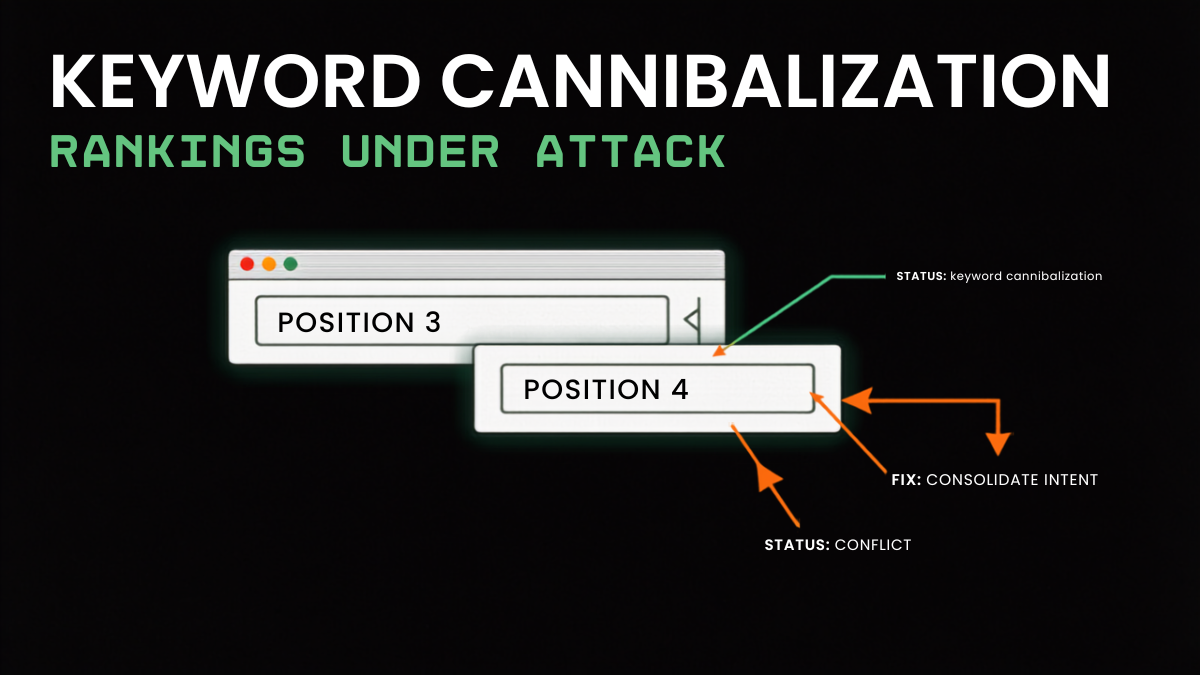
You publish content steadily for a year or two, and somewhere in that pile, two pages start targeting the same keyword without anyone deciding that on purpose. Neither one wins. Both underperform. And it’s rarely obvious until someone finally goes looking.
That’s keyword cannibalization, and it’s one of the sneakier ways a growing site quietly sabotages itself.
The signs that actually mean something
Not every keyword overlap is cannibalization. Here’s what genuinely signals a problem, versus normal SERP noise:
- Rank swapping. The same query shows Page A ranking this week, Page B next week, back to Page A after that. That volatility is Google itself being unsure which of your pages deserves the spot.
- Split impressions in Search Console. One query, multiple URLs, each getting a fraction of the impressions and clicks the query could support if consolidated into one strong page.
- Unexplained CTR drops with stable rankings. If Google is serving your weaker, less relevant page instead of your strongest one for a given query, users are seeing a worse listing than they should be.
- A page ranks lower after publishing something new. If a fresh post tanks an older page’s position for the same query, you just created a cannibalization problem instead of solving a content gap.
How to actually find it
Use a site search operator with your target keyword to surface every page even loosely touching that topic, then manually review for real overlap in intent, not just shared words. Cross-reference with Search Console’s query and page data, specifically looking for more than one URL appearing for the same query with meaningfully overlapping impressions.
This is also where a proper keyword map earns its keep. If you’ve never assigned one primary target keyword per URL, cannibalization isn’t a risk, it’s already happening somewhere on your site.
Not every overlap needs fixing
Two pages ranking for related terms with genuinely different intent isn’t a problem, it’s healthy topical coverage. The cases actually worth fixing are the ones where:
- One page clearly dominates and the other gets near-zero impressions, meaning the fight is already decided and the weaker page is dead weight.
- Both pages target the identical intent with no meaningful differentiation, so Google is guessing rather than choosing.
The fix depends on the case
If one page should clearly win: merge the strongest content from both into the winner, then 301-redirect the weaker URL. This consolidates backlinks, internal link equity, and engagement signals into a single page instead of splitting them.
If both pages should exist but currently overlap: re-optimize each around a genuinely distinct angle or sub-intent, and update internal links so each page points to its own dedicated keyword rather than both pointing at the same term.
If you’re building a content cluster on purpose: make sure your pillar page and its supporting cluster content are structured with clear hierarchy, not competing head-to-head for the same head term. A cluster should reinforce the pillar’s authority, not steal its rankings.
How to stop it from happening again
Keep a living keyword map that assigns one primary target to every URL before it’s published, not after. Review it quarterly, especially before a content sprint, because most cannibalization is created by good intentions: someone writes a genuinely useful new post without checking whether the site already covers that exact query.
This connects directly to site architecture more broadly. A site with clear hierarchy and intentional internal linking rarely develops serious cannibalization by accident. A site that’s grown organically without a map almost always has some, whether anyone’s noticed yet or not.